


09 Dec “INHUS” Introduces Carbon-Neutral Solution for Hybrid Buildings
Bringing together engineering expertise and innovation, building manufacturer INHUS is introducing a new, carbon-neutral solution to the Baltic region: a hybrid three-layer façade wall.
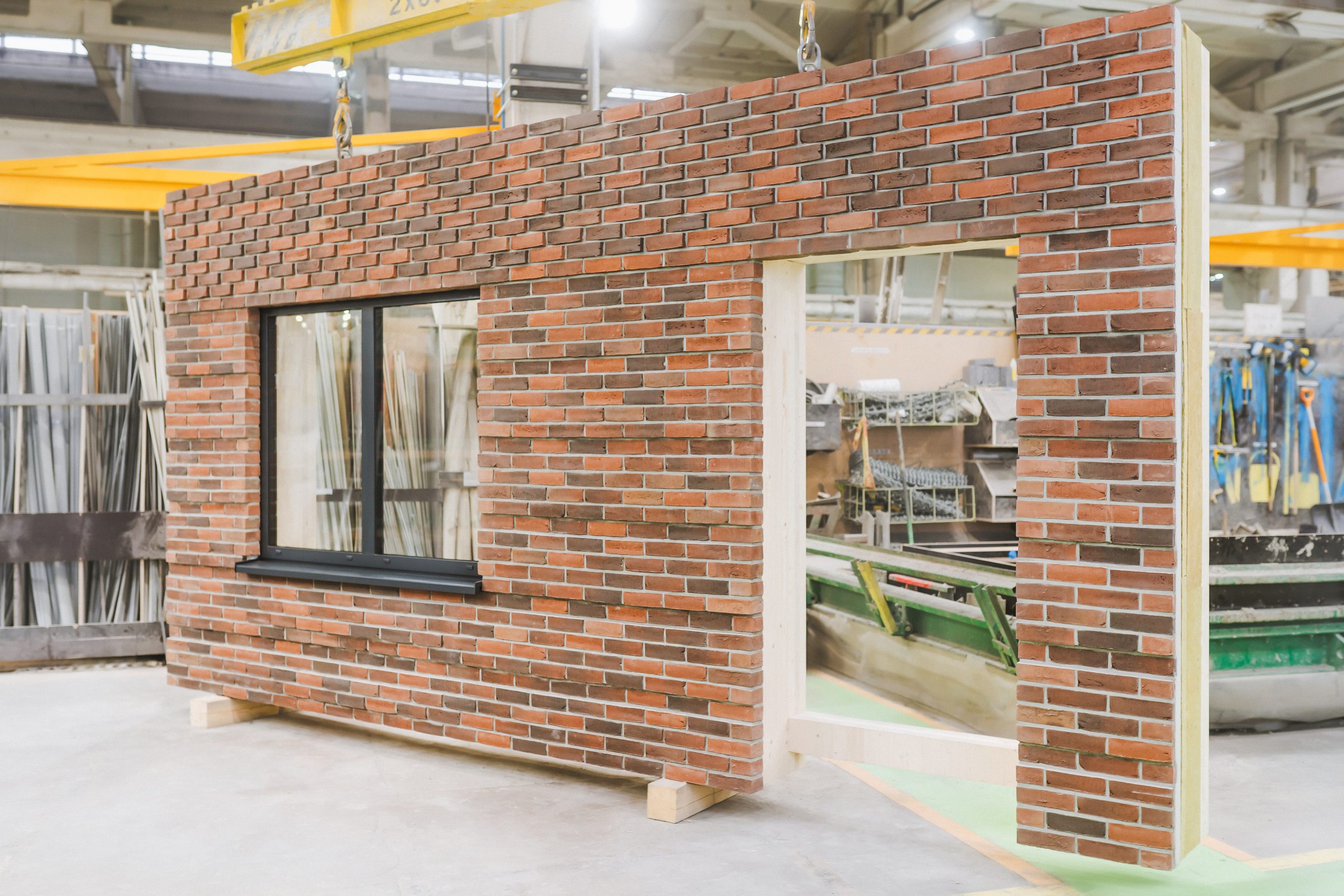
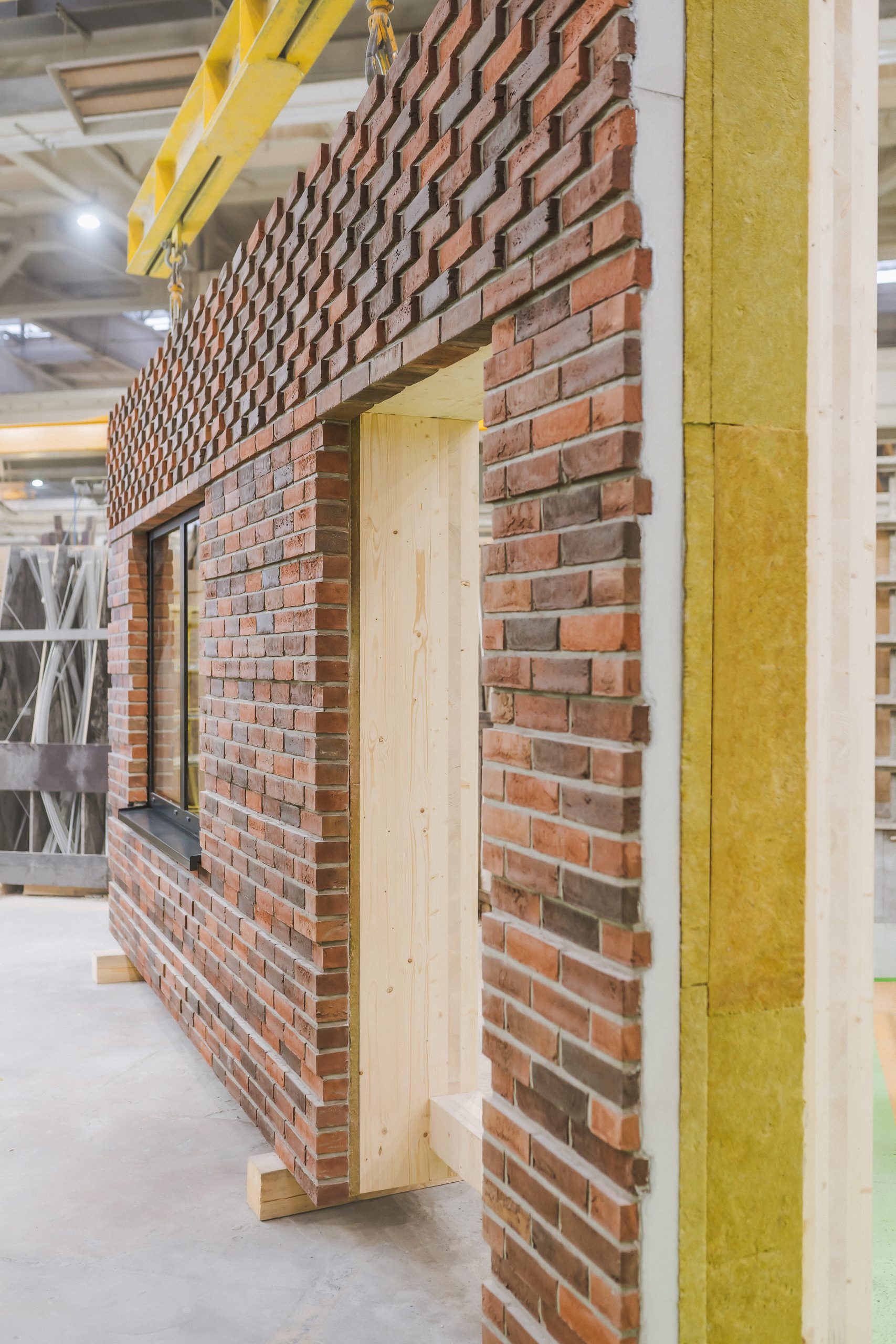
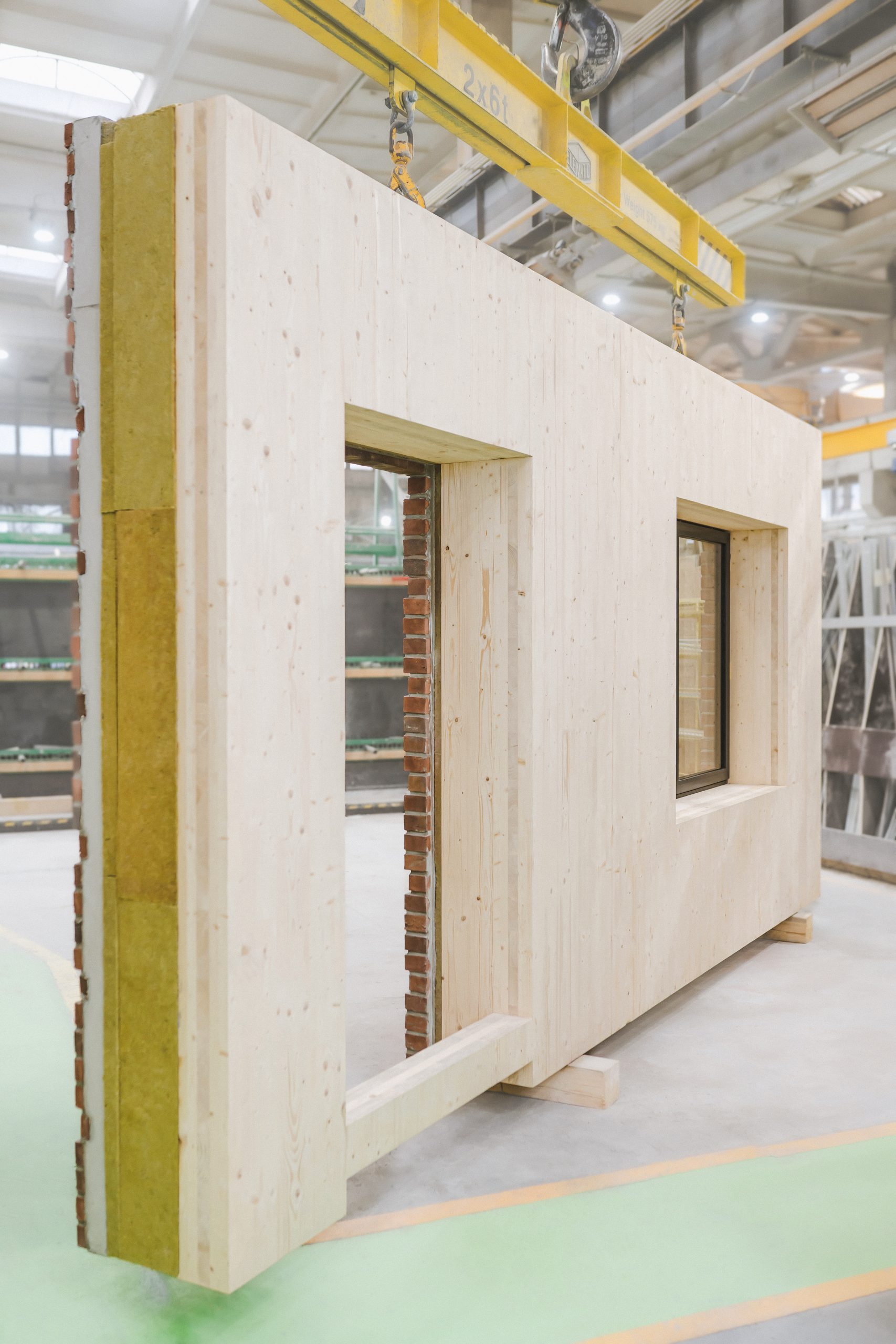
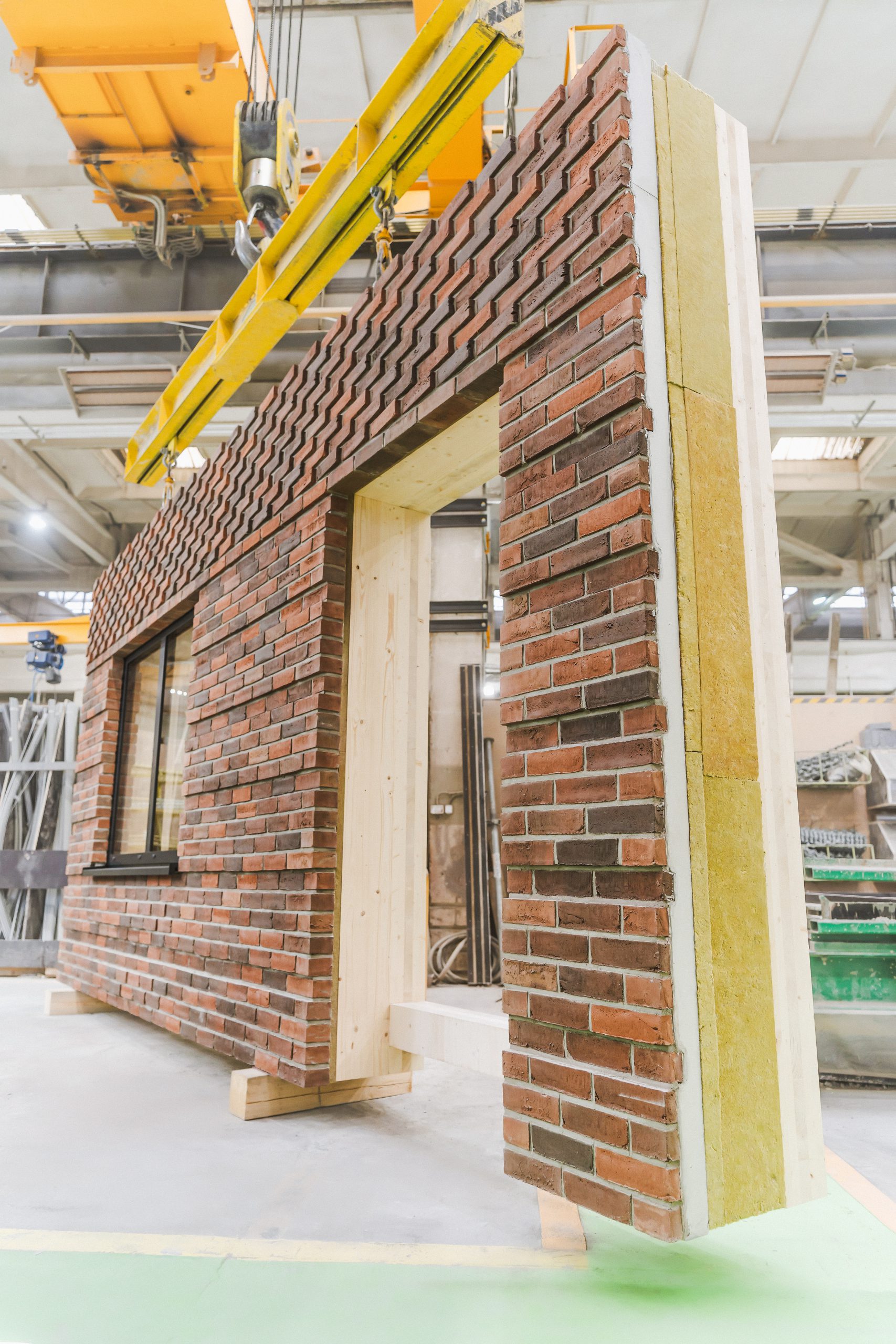
With sustainability at the core of its mission, INHUS has developed a façade system that combines factory-installed brickwork with a crucial ingredient – wood, which enables the wall to achieve carbon neutrality. The prefabricated wall consists of three layers: an inner layer of CLT (cross-laminated timber), an insulating core, and an outer concrete layer with embedded bricks and pre-installed windows. According to Tadas Raškauskas, INHUS Commercial Director, this innovation could accelerate the adoption of hybrid buildings and become a valuable tool in the effort to reduce CO₂ emissions.
“Hybrid buildings have the potential to become a standard of the future – offering durability, safety, and a low carbon footprint without increasing construction costs,” says Raškauskas.
He adds that exploring such solutions is the only viable way to align with government targets aimed at increasing the use of wood in construction. However, designing and manufacturing hybrid structures requires careful consideration of fire safety regulations and long-term durability, which are especially important when working with timber. Cost-efficiency remains a key focus as well, to ensure affordability for the end user.
“To make this hybrid wall viable for real-world projects, we’re currently collaborating with partners in Sweden. Together, we’re evaluating the associated risks and benefits of using timber. We’re also preparing to conduct fire resistance tests on the façade system,” explains Raškauskas.
He notes that fire safety and durability are two of the most frequently discussed topics in their research and development efforts. These concerns were brought into sharp focus following the fire in Malmö, Sweden, where a wooden residential building was destroyed in September.
“It’s crucial to understand what caused that incident, so we can help ensure such tragedies don’t happen again,” Raškauskas emphasizes.
Looking ahead, Raškauskas is optimistic that the new hybrid three-layer façade wall will find its place in the market and play a key role in the next generation of sustainable, high-performance buildings.

Sorry, the comment form is closed at this time.